

Chhatrapati Sambhajinagar's kharif paisewari put at 45.72 paise, rain break hits crops
 Images are not validated/verified
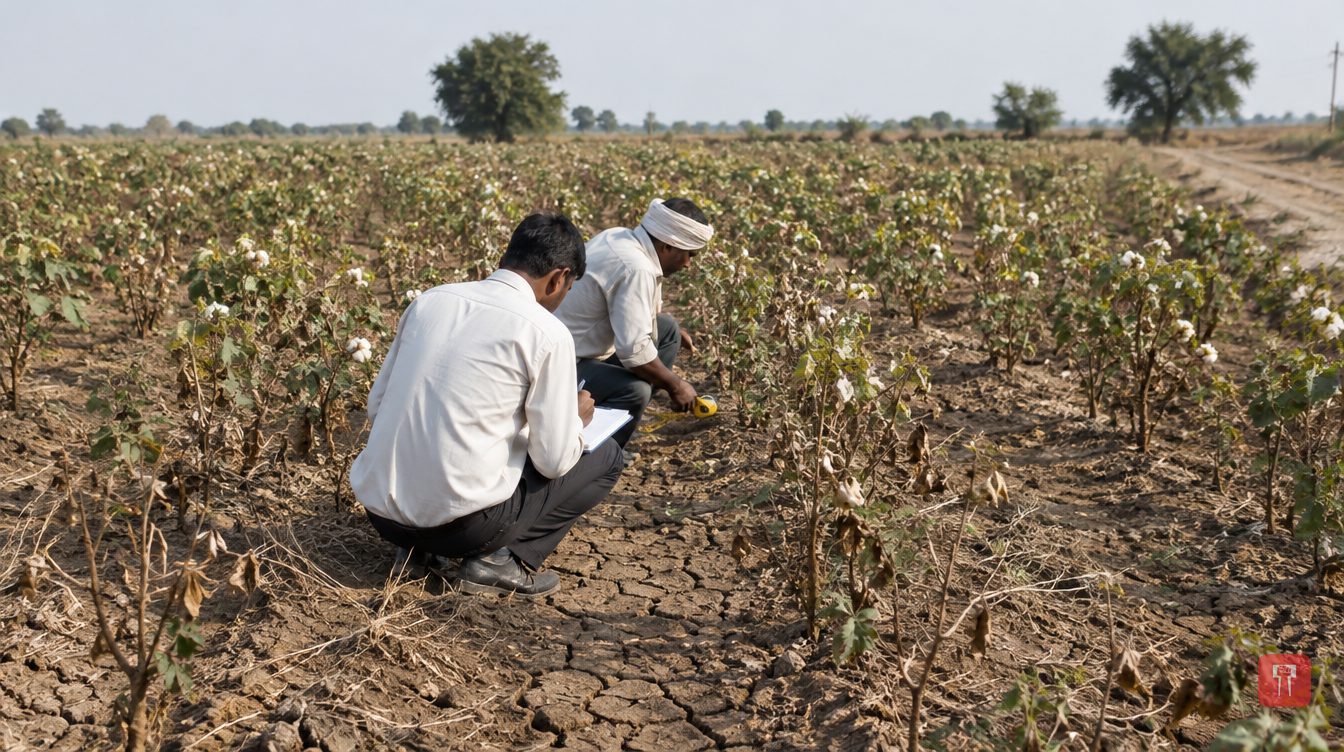
The district administration has issued the revised kharif paisewari for all 1,354 villages, formally confirming drought conditions after a long dry spell damaged crops.
Rain failed to support farmers in Chhatrapati Sambhajinagar district from June. A long dry spell during the crop growth stage has caused heavy damage to kharif crops. The district administration has now issued the revised kharif paisewari.
The average paisewari for all 1,354 villages in the district works out to 45.72 paise. This officially confirms drought conditions in the district. The initial estimate (nazar paisewari) had been above 50. With the official paisewari out, the way is open for government relief. The state government had already declared a first-phase drought in the district, citing deficient rain and other factors.
The Revenue Department's paisewari count has also made clear that yields have fallen sharply. The kharif sowing area in the district is 7,99,594 hectares, of which 7,54,952 hectares were sown this year. Rain did not arrive in June as expected, so sowing kept getting pushed back. After that, it did not rain everywhere.
By tehsil, the lowest paisewari of 44.00 was recorded in three tehsils: Vaijapur, Khultabad and Kannad. The highest, 48.7, was in Gangapur tehsil.
Paisewari has not been issued for some villages. Nineteen villages in Chhatrapati Sambhajinagar tehsil and four in Paithan tehsil fall within municipal corporation and municipal council limits, so their paisewari was not declared. Gangapur tehsil has 226 villages in all, but four of them have been acquired for the Jayakwadi project, so paisewari was issued for the remaining 222. The administration gave this information. In all, 27 villages have no paisewari.
Paisewari is determined in two ways. Mid-season, while the crop is standing in the field, the patwari, gram sevak and agriculture assistant visit the fields and inspect the crop on the spot. The nazar paisewari is set after considering the amount of rain, crop growth and the incidence of pests and diseases.
The actual method of arriving at paisewari in both kharif and rabi seasons is the crop-cutting experiment. In it, the crop on selected plots is harvested and threshed in the presence of the sarpanch, farmers, patwari, gram sevak and agriculture assistant. The wet grain is then weighed. The grain is dried in the sun and weighed again. The average yield per hectare is worked out from this.
Reach readers on the ward they actually live in.
Advertise with Prime Time 24Reach readers on the ward they actually live in.
Advertise with Prime Time 24Reach readers on the ward they actually live in.
Advertise with Prime Time 24Choose primetime24.com as a preferred source on Google Google shows more stories from your preferred sources in Top Stories.
Reach readers on the ward they actually live in.
Advertise with Prime Time 24
Comments
No comments yet. Be the first.