

Centre bans export of lithium-ion battery 'black mass' to keep critical minerals in India
 Images are not validated/verified
The Centre has banned, with immediate effect, the export of lithium-ion battery 'black mass', which contains lithium, cobalt, nickel and manganese, to cut dependence on other countries.
The Centre has taken a major step to meet rising demand for electric vehicles and reduce dependence on other countries for critical minerals. The export of lithium-ion battery 'black mass' has been banned with immediate effect. The decision will keep valuable minerals such as lithium, cobalt, nickel and manganese available to the country's industries. It could prove significant for the battery recycling industry, electric vehicle manufacturing and the green energy sector.
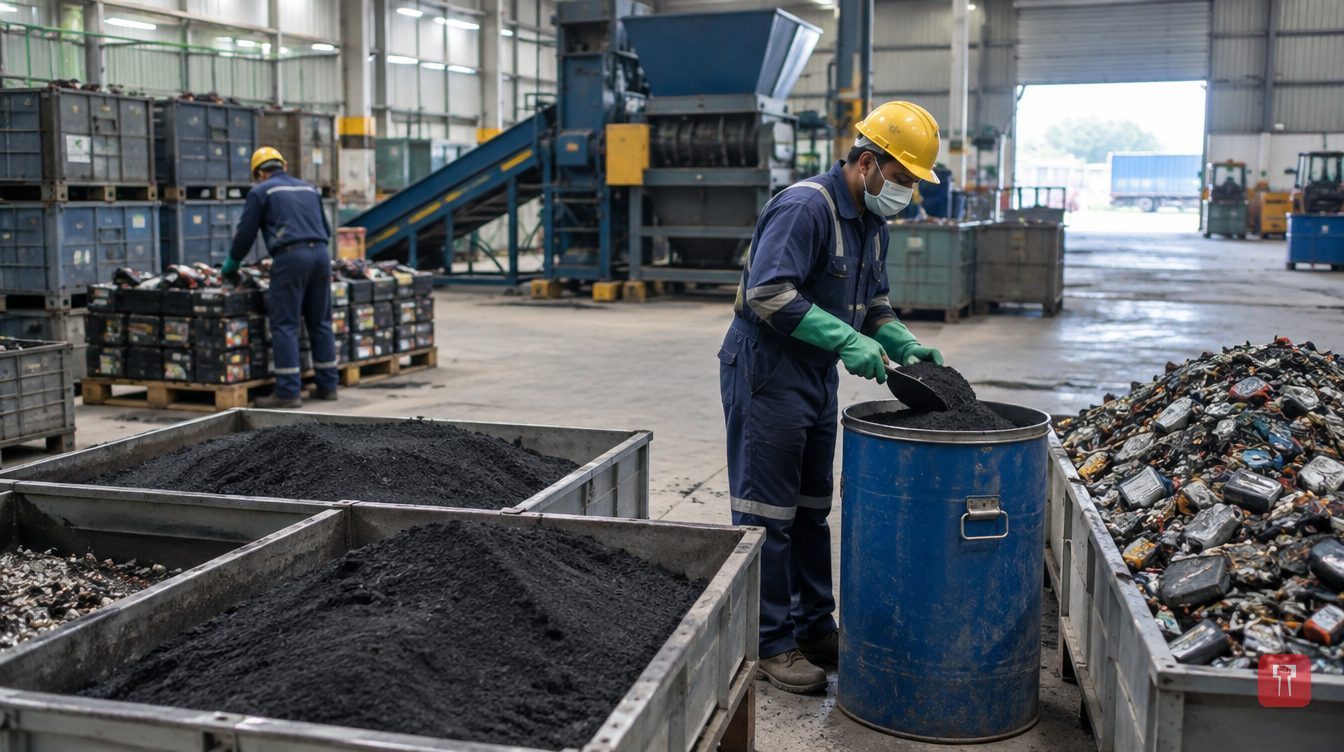
It is important to understand what black mass is. Old and discarded lithium-ion batteries, and the waste generated during battery manufacturing, are processed and shredded. The blackish powder obtained from this process is called 'black mass'.
The powder contains critical minerals such as lithium, cobalt, nickel and manganese. These minerals are used on a large scale in making electric vehicle batteries, electronic devices and energy storage systems. Recovering them from used batteries is therefore important from both economic and environmental points of view.
According to the Ministry of Commerce and Industry, the Directorate General of Foreign Trade (DGFT) issued a notification on November 10, 2026. Under it, 'black mass' has been placed in the prohibited export category.
India's capacity to process battery waste and separate valuable minerals from it is growing. But black mass produced in the country was being sent abroad, so local recycling industries faced difficulties in getting raw material. As a result, some industries had to depend on other countries for the minerals they needed.
With the export ban, this raw material will now continue to be available to domestic industries. Battery recycling projects can make better use of their capacity.
Lithium, cobalt and nickel are key minerals for making electric vehicle batteries. With demand for electric vehicles rising in India, it is necessary to maintain a stable supply of these minerals. If black mass stays in the country, recycling companies will be helped in extracting minerals from old batteries, and there will be a chance to reduce dependence on imported raw material. New investment and jobs may also grow in battery recycling, mineral recovery and related technology.
In September 2025, the Centre approved an incentive scheme of Rs 1,500 crore under the National Critical Mineral Mission to develop capacity for separating critical minerals from batteries and e-waste. With black mass available in the country, projects in this sector may find their raw material supply improved. The decision is also expected to boost the circular economy, meaning the useful parts of used items can be brought back into production.
The step is also important environmentally. Old batteries can pose a risk to the environment if not disposed of properly. If they are processed with the right technology, valuable minerals can be reused and waste is reduced.
On the whole, the ban on black mass exports is part of efforts to strengthen India's battery recycling and critical mineral supply chains. However, how much real benefit it brings will depend on the country's processing capacity, the supply to industries and the prices of recovered minerals.
Reach readers on the ward they actually live in.
Advertise with Prime Time 24Reach readers on the ward they actually live in.
Advertise with Prime Time 24Reach readers on the ward they actually live in.
Advertise with Prime Time 24Choose primetime24.com as a preferred source on Google Google shows more stories from your preferred sources in Top Stories.
Reach readers on the ward they actually live in.
Advertise with Prime Time 24
Comments
No comments yet. Be the first.