

All farm pumps in Maharashtra to get daytime solar power by March-end, says Mahavitaran chief
 Images are not validated/verified
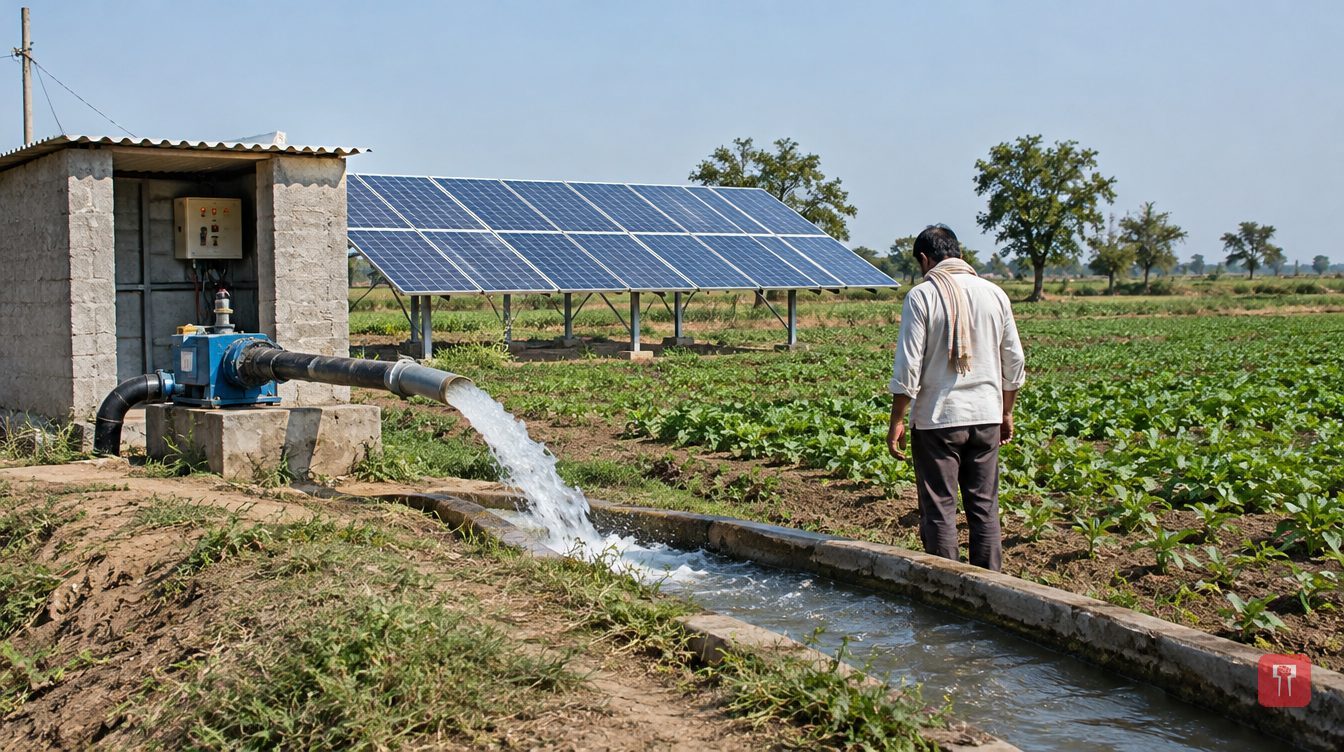
Lokesh Chandra says 80 per cent of farm pumps already get daytime power under the Chief Minister Solar Agriculture Feeder Scheme 2.0, with full coverage targeted by March.
Nagpur, November 5, 2026: The Chief Minister Solar Agriculture Feeder Scheme (Mukhyamantri Saur Krushi Vahini Yojana) 2.0 was launched under Chief Minister Devendra Fadnavis so that farmers in the state get daytime electricity for their farm pumps. Because of the scheme, 80 per cent of farm pumps in the state now receive power during the day. By the end of March, all farm pumps will get daytime power from solar energy, said Lokesh Chandra, Additional Chief Secretary to the Chief Minister and Chairman and Managing Director of Mahavitaran. He said this on Tuesday (the 3rd).
The international conference Bharat Renewable Energy Summit and Expo 2026 was held in New Delhi, organised by the Union Ministry of New and Renewable Energy. Chandra was speaking at a session titled "Distributed Energy for Energy Security, Self Reliance and Viksit Bharat 2047". He described what Maharashtra has achieved in supplying daytime power to farm pumps by setting up solar projects in a decentralised manner. Tarun Kapur, Adviser to the Prime Minister, delivered the keynote address at the session.
At the ninth session of the International Solar Alliance Assembly, an international session titled "Pumps to Programmes: Scaling Solarisation of Agriculture in the Global South" was held. There, Chandra presented the success story of the Chief Minister Solar Agriculture Feeder Scheme and the Magel Tyala Saur Krushi Pump Yojana (solar agriculture pump scheme on demand) to foreign delegates. Ashish Khanna, Director General of the International Solar Alliance, held a discussion with him.
According to Chandra, the Chief Minister Solar Agriculture Feeder Scheme began in Maharashtra on the basis of the Centre's PM-KUSUM scheme. Under it, solar projects with a capacity of 16,000 MW are being set up in a decentralised form. About 7,000 MW of these projects have been completed so far. With power from these projects and other technical measures, 80 per cent of farm pumps now get power during the day. The aim is to supply daytime solar power to all farm pumps, and this will be achieved by the end of March, he said.
Farm pumps have to be supplied power in two shifts, day and night. He said the problem this creates is faced by all power distribution companies in the country. Shifting to solar energy is the way forward, he said. This would remove the difficulties distribution companies face, give agriculture quality power during the day and also reduce the state government's expenditure on subsidies.
Power demand in Maharashtra is rising rapidly because of new investment and rising living standards. The state has prepared a plan to meet future demand. Chandra said the need for electricity will be met with an emphasis on renewable energy.
He briefed the international delegates on the planning and technical measures of the scheme. He also said Maharashtra leads in installing solar agriculture pumps, with 65 per cent of all solar agriculture pumps in the country installed in the state. He said solar energy has given farmers a dependable means of irrigation. Since they can irrigate whenever needed, wastage of water is avoided, and farm productivity is also seen to be rising, he said.
Reach readers on the ward they actually live in.
Advertise with Prime Time 24Reach readers on the ward they actually live in.
Advertise with Prime Time 24Reach readers on the ward they actually live in.
Advertise with Prime Time 24Reach readers on the ward they actually live in.
Advertise with Prime Time 24
Comments
No comments yet. Be the first.