

Alberta voters reject separation from Canada in referendum, Indian-origin voters play key role
More than 76% of voters in Alberta rejected a proposal to start the process of leaving Canada, with Indian-origin residents credited for a key role.
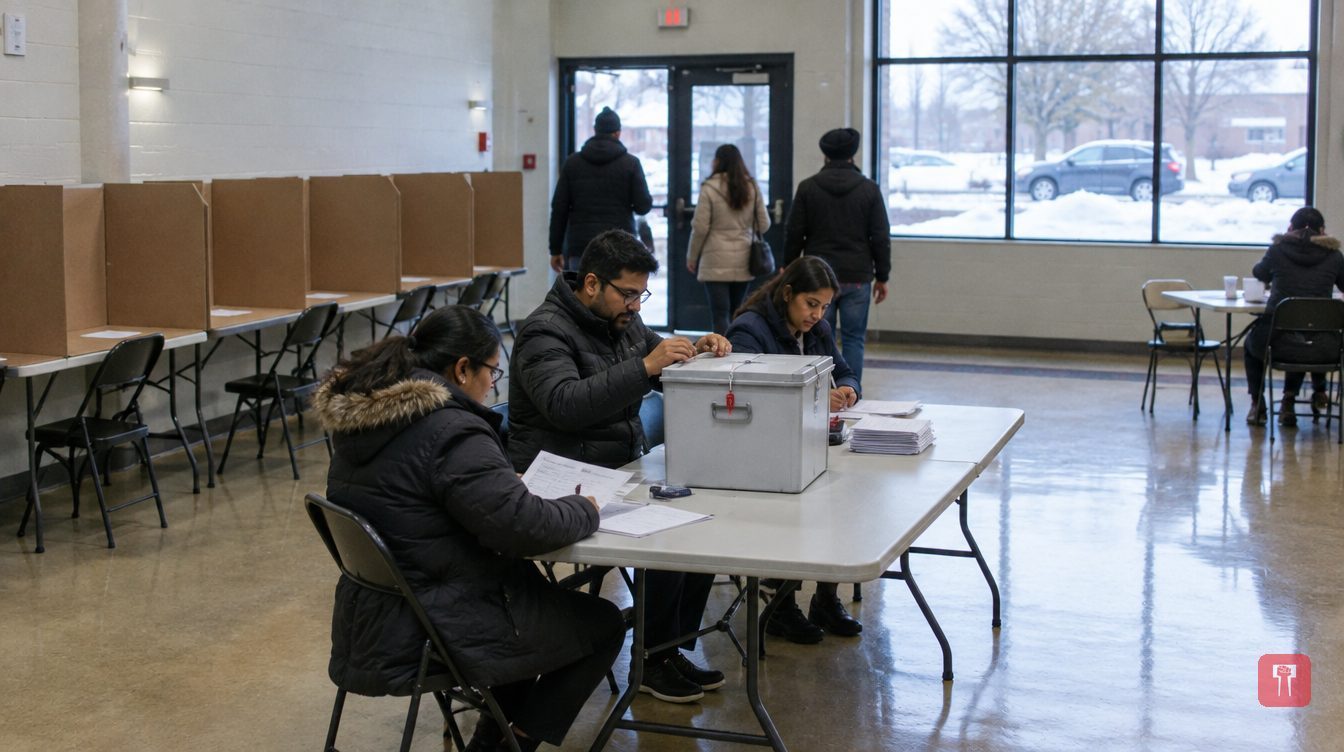 Images are not validated/verified
Canada has been caught in a major political and social storm in recent days. For the past few years there had been a strong demand to separate Alberta, an oil-rich province regarded as economically very powerful, from Canada and make it a new independent country. Against this backdrop, a key referendum on the process of separation was recently held in Alberta.
The commitment shown by citizens of Indian origin to Canada's integrity in the referendum has drawn the attention of the world. The Indian community is being praised for its role in saving Canada from being split in two. At the same time, there are fears that strict restrictions could later be placed in the province on outsiders, especially new migrants.
The main question put to voters in the referendum was whether Alberta should begin the legal process of leaving the country under the Canadian constitution. After the results, Canada's Prime Minister and supporters of unity there breathed a sigh of relief. More than 76% of voters rejected the proposal to separate and decided to stay with the Canadian federation.
The campaign was named "Forever Canadian". The result has, for now, averted the danger of Canada breaking in two, and it is being seen as a big victory for the country's integrity.
People of Indian origin played a very important role in this victory and in keeping Alberta in Canada. According to figures, more than 32,000 citizens of Indian origin currently live in Alberta. They make up about 16 per cent of the new migrants who have come to the province in recent times. In addition, the total number of people of Asian origin living in the province is more than 2 lakh.
While efforts to separate Alberta from Canada were gathering pace, the Indian and other Asian communities voted together "No", against separation. With their votes, these voters made it clear that the future of their next generation, as well as their own, is secure only in a united Canada.
Geographically, until about 50 years ago even ordinary Canadians were not keen to live in Alberta. The main reason was its extremely harsh weather, where the temperature always dips to as low as minus 15 degrees Celsius.
Over the past few decades, however, thousands of hard-working migrants from India and other Asian countries have breathed new life into Alberta's economy through their labour, even in this bitter cold. These migrants have made a major contribution to local industry, healthcare, education, IT and construction.
Despite Canada's unity being saved, a new controversy has now arisen. The referendum did not carry only the question of separation. Voters were also asked 9 more questions on migration, citizenship and who has the right to local resources in the province.
According to the Alberta government and separatist groups, temporary residents from outside the province, including international students and workers, now make up about 6 per cent of the total population. The Alberta government claims that it receives about 150 million dollars a year in tax from these temporary residents. But it has to spend more than 1 billion dollars every year on health, education and other social services for them.
Local people say that the growing population and limited resources are putting heavy pressure on schools, hospitals and housing prices. For these reasons, most local residents in the referendum supported proposals to cap the arrival of outsiders, stop the free social services given to temporary residents and give preference to locals.
Although Alberta has refused to leave Canada, local politics is likely to turn more aggressive over the province's autonomy and control over migration. The provincial government may now pressure the federal government in Ottawa, Canada's capital, and pursue a policy of limiting the number of new migrants, international students and workers coming to Alberta.
The possibility cannot be ruled out that these developments could directly affect Indian youths who want to go to Canada, especially Alberta, to study, work or settle permanently (PR).

Comments
No comments yet. Be the first.