

AI image recognition can show what FMCG shoppers actually see on shelves, but action must follow
 Images are not validated/verified
Shelf conditions in FMCG are measured too rarely to act on, and AI image recognition can add photographic evidence if it is tied to action on the ground.
An FMCG company knows how much stock it dispatched, how much the distributor billed and how much the retailer ordered. Yet one simple question still troubles it: what did the shopper actually see on the shelf? This is the blind spot between the commercial plan and the buying decision. Many brands do check shelves, but through occasional audits, selective checks and reports that arrive after conditions have changed. The shelf is not entirely unmeasured, but it is measured so rarely that decisions cannot be taken on it with confidence. AI image recognition is now bringing this problem into focus.
An inventory system can show that a product reached the store. Order data can show that the retailer bought it. Neither says whether the product was visible while the shopper was looking for it. A full case of shampoo may sit in the stockroom while the shelf is empty. Promotion money may have been spent and the product may still not show in the display.
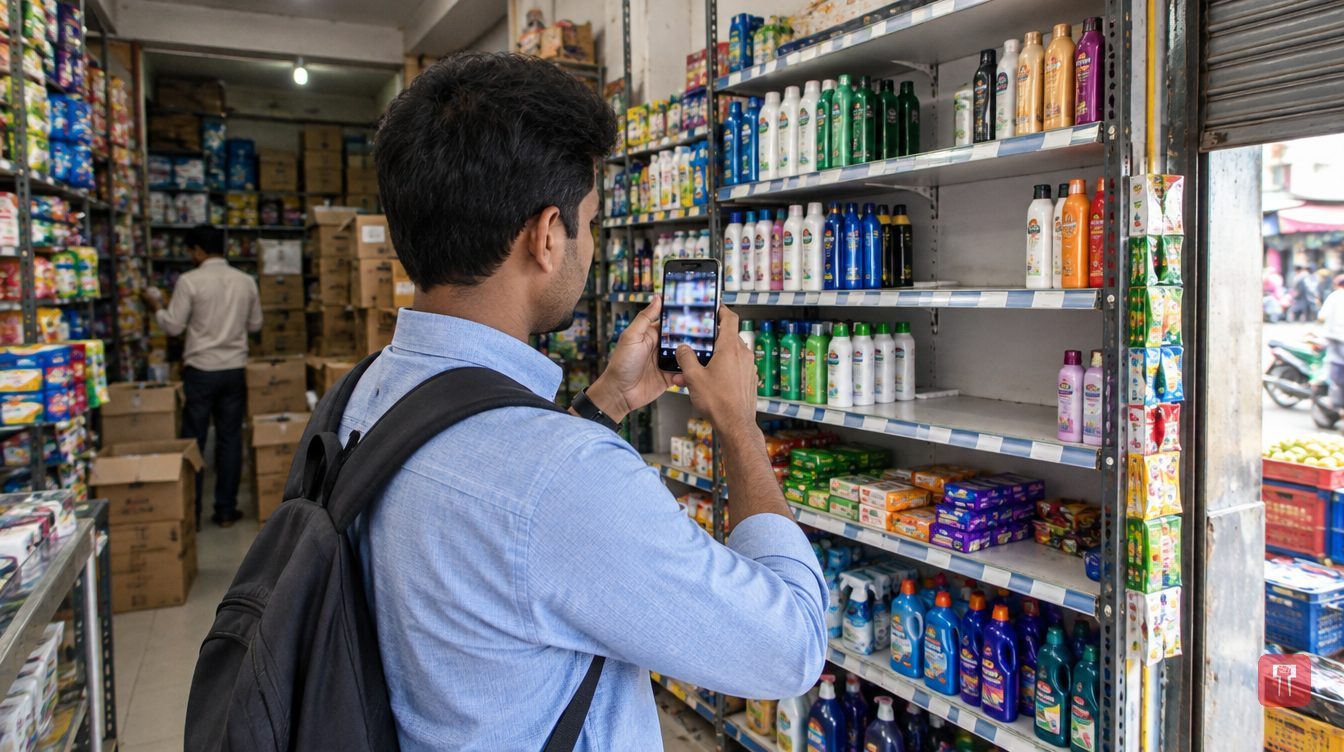
On-shelf availability is therefore not a figure that can simply be pulled from inventory. It is the ground condition at a particular outlet at a particular time. AI image recognition adds photographic evidence to existing data. From a photo of the shelf, it can check the presence of SKUs, facings, share of shelf, planogram compliance and visible gaps. When combined with sales and inventory data, it shows where the plan and reality differ.
When a product sells poorly, teams usually look at demand, price, reach of distribution or competitor moves. All of these matter, but without evidence of what the shopper was shown, checking demand is difficult. Take two similar stores. In one, the lead SKU has the expected facings and the space looks clear. In the other, it is missing or has less space. Treating both as the same demand problem would lead to the wrong remedy. One needs a better proposition, the other needs restocking or better placement.
The technology does not prove that every sales decline is a failure of execution, and it should not become a tool for blaming anyone. It makes the inquiry more precise: what changed in the outlet, when it changed and who can fix it.
A photo is evidence, not an all-seeing eye. Software can catch visible products and probable gaps, but pack sizes can look alike, packaging changes, products overlap, and lighting and camera angles vary. An empty space does not show whether stock is kept at the back or restocking is under way. There are also practical difficulties such as narrow aisles, shelf depth, uneven lighting and partly visible products. Clear rules for taking photographs, an updated catalogue, confidence thresholds and human review of uncertain results are therefore necessary. If wrong observations reach the dashboard, the brand will only polish the old reporting problem.
The real value lies not in the count of photos or alerts but in the action that follows. An alert about a missing key SKU is useful only if someone can act on it. If stock is available, a field representative may need to fill the shelf. If the outlet has run out, the distributor or the replenishment team must step in. If a competitor has taken the place of a paid display, trade marketing must resolve the commitment. Shelf intelligence should connect to existing retail execution workflows built on Sales Force Automation (SFA) and Distributor Management System (DMS), and not become one more dashboard. Every exception should have an owner, a priority, a next step and a confirmation.
The gain will come not from seeing more but from seeing continuously. One audit is only a glimpse. Repeated images show where execution breaks, how often it breaks and whether a fix holds. Questions arise such as whether stockouts are concentrated in certain clusters of outlets, whether the visibility of a launch drops after the first week, and whether paid displays are actually in place. Shelf inspection should be read together with orders, sell-out, inventory and visit history, and not as a standalone score.
The real front is the decision, not the photo. A shelf can be measured when a brand can see what happened, take action and confirm that the situation has changed. The winners will be brands that link what AI image recognition captures to decisions that improve availability, execution and ultimately the shopper's choice.

Comments
No comments yet. Be the first.