

5.16 crore cases pending in district courts as vacancies and delays slow justice
About 5.16 crore cases are pending in district and subordinate courts, and 333 High Court posts are vacant, even as 12 reforms are proposed to speed up justice.
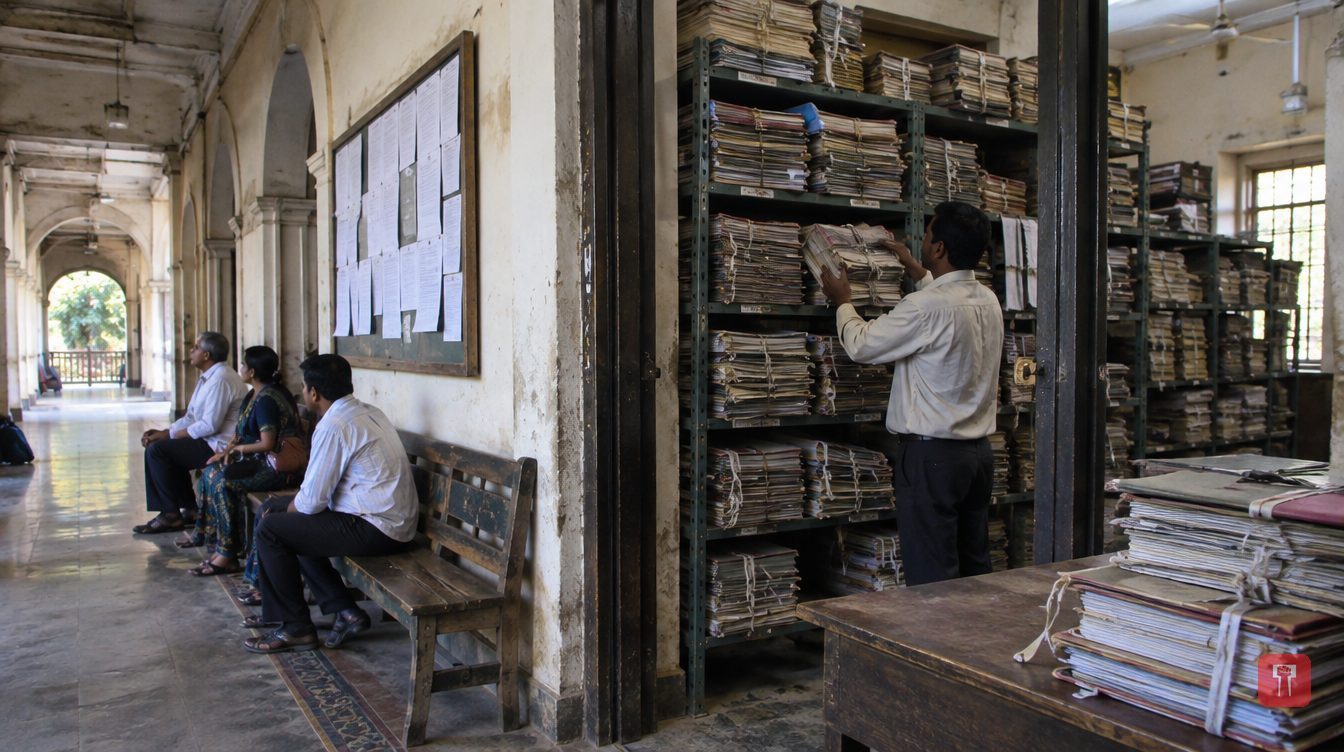 Images are not validated/verified
Nagpur: Justice is paramount in any democracy. The Constitution assures every citizen equality, freedom and justice. But when people must go around courts for years to get justice, their savings go into lawyers' fees and peace at home is broken, the question arises whether merely having the right to justice is enough, or whether getting justice on time is just as important.
The biggest challenges before the Indian justice system today are pending cases, a shortage of judges, a lack of basic facilities and procedural complications. A case is not just a file. Behind it lie someone's home, livelihood, honour and the future of an entire family.
According to 2026 figures from the National Judicial Data Grid (NJDG), about 5.16 crore cases are pending in district and subordinate courts. Of these, 4.04 crore are criminal and 1.12 crore are civil cases. The figures keep changing, but the meaning is clear: crores of people are awaiting a final verdict. Most worrying, a litigant often dies before the verdict and the next generation carries on the same fight.
The common citizen deals most with district courts. Testimony, scrutiny of documents and bail take time there, and then appeals go to the High Court and the Supreme Court. The right to appeal is essential, but delay at every level turns the process itself into a punishment. So, not just the total number, but also how many cases have been pending for 5, 10, 15 and 20 years should be disclosed.
A shortage of judges is also a major reason. According to Law Ministry figures of June 1, 2026, the Supreme Court has judges in 32 of its 38 sanctioned posts, with 6 vacant. In the 25 High Courts, 789 of 1,122 sanctioned posts are filled and 333 are vacant, meaning about 30% of the seats are empty. Regular assessment is needed in district courts too. Delays in appointments make matters worse.
Across the three levels, 5.16 crore cases are pending in district courts, 65.43 lakh in the High Courts and 95,739 in the Supreme Court. The problem is therefore not at one level but across the whole system.
According to government figures of February 2026, the district judiciary has 25,894 sanctioned posts of judicial officers, of which 21,027 are working. There are 22,712 courtrooms. In many places, records management, waiting rooms and digital facilities are not used uniformly. For villagers, even reaching a court is costly. Spending on infrastructure is therefore an investment.
Criminal cases in district courts are 3.6 times as many as civil cases. The question is whether small disputes are being settled on time. Delays in police investigation, charge sheets and the appearance of witnesses can be reduced. Where the law permits, Lok Adalat and mediation can bring settlements, but compromise is not possible in every criminal case.
A considered plan can be drawn up to reduce the burden. It would list minor offences that cause little harm and do not involve serious violence, identify small cases pending for years, and promote compromise and Lok Adalat. Parliament could give limited relief in eligible cases with clear eligibility, exceptions and judicial oversight. Murder, rape and serious crimes against women and children should stay outside it. For first-time petty offenders, reformative options such as a warning and probation should be considered. The aim is not to encourage crime but to use resources wisely.
Transparency and accountability are also stressed. Judicial independence and transparency are not opposed to each other. Citizens have a right to know why there is delay, and platforms such as the NJDG are important in this. The status of every case should be online, repeatedly adjourned cases should be reviewed, reasons for adjournments should be recorded, public reports on old cases should be issued, figures on vacant posts and pending cases should be updated regularly, and delays in serving summons should be addressed. But in the name of transparency, it is not right to judge the quality of judges' decisions merely by numbers.
Twelve suggestions have been made for reform. Vacant posts should be filled on time and posts reviewed according to workload. Special drives should be run for cases older than 5, 10, 15 and 20 years, without neglecting new urgent cases. Needless repeated dates, absent witnesses and problems in serving summons should be resolved. A simple, time-bound procedure should be created for small cases. E-filing, digital records and video conferencing should be expanded, along with help centres. Buildings, courtrooms, staff and technology should get full funding. There should be better coordination among police investigation, forensics, prosecution and the court. Alternative resolution should be promoted in family, commercial and property disputes. The quality of free legal aid for the poor should improve. Workload, disposal and adjournments should be reviewed regularly, with the aim of identifying shortfalls rather than applying pressure. Special attention should go to civil disputes such as land and succession. And a public report should come out every year on how many cases were filed, how many were disposed of, how many old cases were cleared and what caused the delays. The measure of success should be not the closing of files but saving citizens' time and expense and delivering fair justice.
The common man pays the highest price. A poor family struggling over land, an elderly person longing to see a property dispute decided, an accident victim awaiting compensation and an undertrial facing a case all have their lives affected. The cost is not only fees, but also travel, leave from work, documents, waiting and mental distress.
The conclusion is that the Indian justice system has played a big role in protecting the Constitution, but reform is continually needed. This is beyond the capacity of any one institution. The judiciary, government, police, bar and citizens must all play their part. In the name of speed, quality, fairness and rights must not be compromised. The aim is to protect the innocent, punish the guilty, give justice to the victim and a fair hearing to the accused.
Justice reform must be seen not merely as a government scheme but as a national duty tied to citizens' dignity, because every year spent waiting for justice breaks someone's hope. Justice matters only when it is fair, accessible, affordable and timely.
(The writer, Sanjay Agrawal, is a social thinker based in Nagpur.)

Comments
No comments yet. Be the first.