

Indian diet and daily walks put 60.9% of early type 2 diabetes patients in remission, study finds
 Images are not validated/verified
A six-month programme of traditional Indian meals and a set walking routine led to diabetes remission in 60.9 per cent of 87 adults with early type 2 diabetes, a two-city study says.
A study by Chellaram Diabetes Institute, Pune, and Dr Kale's Diabetes and Psychiatry Clinic, Chhatrapati Sambhajinagar, has found diabetes remission in 60.9 per cent of adults with early type 2 diabetes after a six-month programme based on traditional Indian food and a set pattern of physical activity. The study was presented on November 13, 2026.
It has been published in the international journal Diabetes & Metabolic Syndrome: Clinical Research & Reviews (Elsevier, 2026). It included 87 adults who had had diabetes for two years or less. All their diabetes medicines were stopped from day one, under close medical supervision.
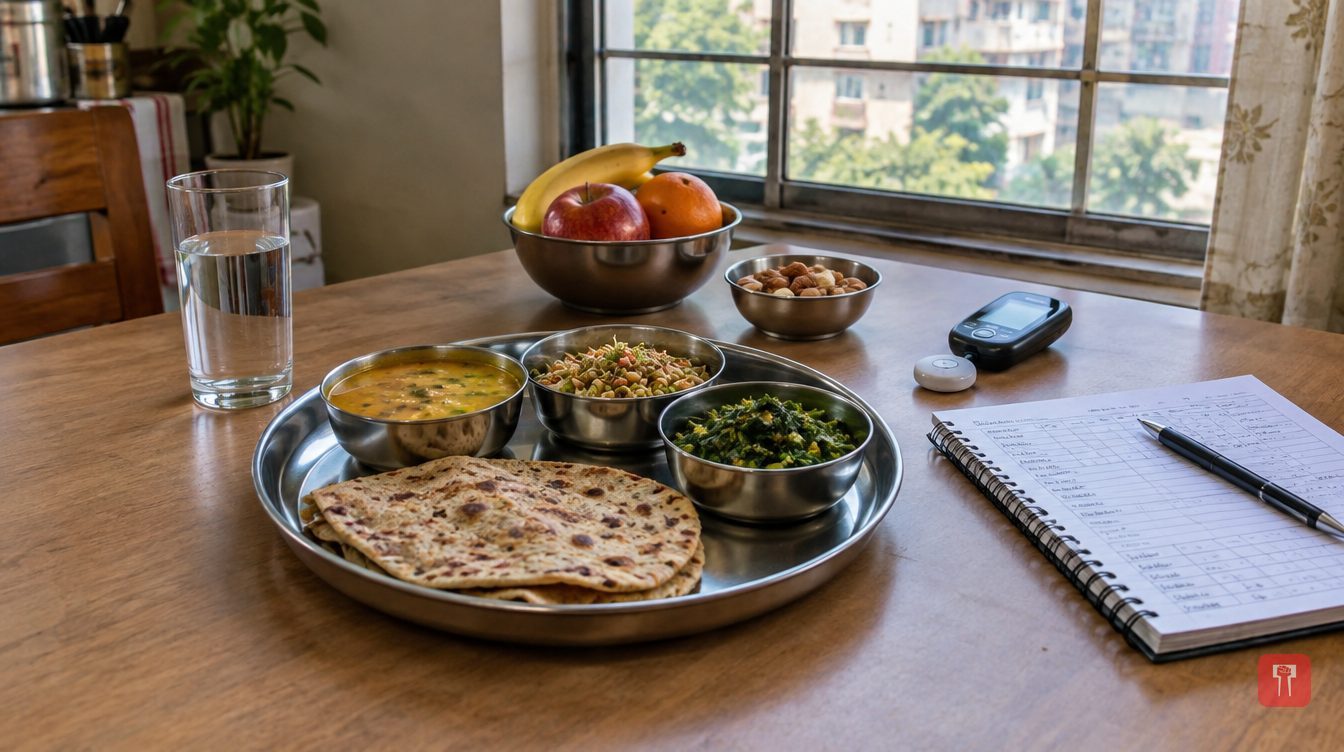
The patients were given a Local Healthy Moderate Carbohydrate (LHMC) diet of familiar items such as multigrain chapati, dal, sprouted grains, green leafy vegetables, nuts and fruit, in fixed portions with balanced nutrients. It was home-cooked food of about 1,200 kilocalories a day, with 44 to 46 per cent of energy from carbohydrates, 25 to 30 per cent from protein and 25 to 30 per cent from fat. Participants were also advised to walk for 40 minutes and do 10 minutes of deep-breathing exercises daily. Continuous glucose monitoring (CGM) was used at the start and end of the study to assess glucose.
At the end of six months, 53 participants (60.9 per cent) were in diabetes remission without any glucose-lowering medicine. Among those who completed the study, the figure was 61.3 per cent. Average weight fell by 4.67 kg and average HbA1c dropped from 7.32 per cent to 6.27 per cent, an indicator of better blood glucose control. On CGM, time spent in the normal glucose range was 90.7 per cent in patients who achieved remission and 85.5 per cent in the rest. Three of the 87 patients had to be given rescue medicines, and there was no major adverse event.
One key finding concerned the link between exercise and remission. Participants who completed the set walk on at least 80 per cent of days had an adjusted likelihood of remission 8.24 times higher than those who followed it less closely.
Dr Vedavati Purandare, consultant diabetologist and head of clinical services at Chellaram Hospital Diabetes Care and Multispecialty, said: "Our patients did not need special food, hunger or a fasting window. They ate the same traditional Indian food that is cooked in their homes, in measured portions, and walked every day. Six in ten patients achieved remission without any diabetes medicine, and those who walked most regularly had the best results."
Dr A.G. Unnikrishnan, CEO of Chellaram Hospital Diabetes Care and Multispecialty and an endocrinologist, said: "Diabetes has long been seen as a disease that only worsens. This study shows that if caught early, it can be brought into remission with the Indian thali, not against it. Not every patient needs a strict diet, and treatment can be tailored to each person. A larger controlled trial must now confirm these results, and patients should change their treatment only after consulting a doctor."
Dr Mayura Kale, a researcher on the study, said: "Studying in two cities let us test this approach on people from different backgrounds, not just in one clinic. Our participants ate what their families eat: chapati, dal, sprouted grains and vegetables, in measured portions. We tracked their eating through food diaries, photographs of meals and regular phone calls, and found that people could stick with it for six months. The clearest signal in our data was daily exercise. Those who exercised on most days had a much higher chance of remission. This is a message that a diabetes patient in any city or town can act on."
Dr Shalbha Tiwari, research scientist and key member of Chellaram Diabetes Research Centre, speaking as a researcher and on behalf of the Chellaram Foundation, said: "As a researcher, I am interested in what changed inside the body. Insulin resistance fell, triglycerides and liver enzymes came down, and on continuous glucose monitoring, glucose appeared in the normal range without any diabetes medicine. All this suggests the body's own glucose control was improving. We analysed every participant who enrolled, including those who dropped out, and the remission rate was still 53 per cent. This was a single-arm study, so the next step is a randomised trial. The Chellaram Foundation supports such research because a mainly plant-based diet built on grains, pulses, vegetables and nuts can be good both for people and for the planet."
The study had no control group and ran for only six months, so confirmation through a randomised trial is necessary. It carries a clear warning that patients should not stop diabetes medicines on their own. The paper's authors include Kale MC, Purandare VB, Tiwari S, Aherkar J, Kulkarni G and Manekar S. It is published in Diabetes Metab Syndr. 2026;20:103487.
Reach readers on the ward they actually live in.
Advertise with Prime Time 24Reach readers on the ward they actually live in.
Advertise with Prime Time 24Reach readers on the ward they actually live in.
Advertise with Prime Time 24Choose primetime24.com as a preferred source on Google Google shows more stories from your preferred sources in Top Stories.
Reach readers on the ward they actually live in.
Advertise with Prime Time 24
Comments
No comments yet. Be the first.