

Western Railway says all 371 drinking water tests in a day at eight locations were satisfactory
Western Railway said every one of the 371 drinking water quality tests done across eight locations in a single day returned satisfactory results.
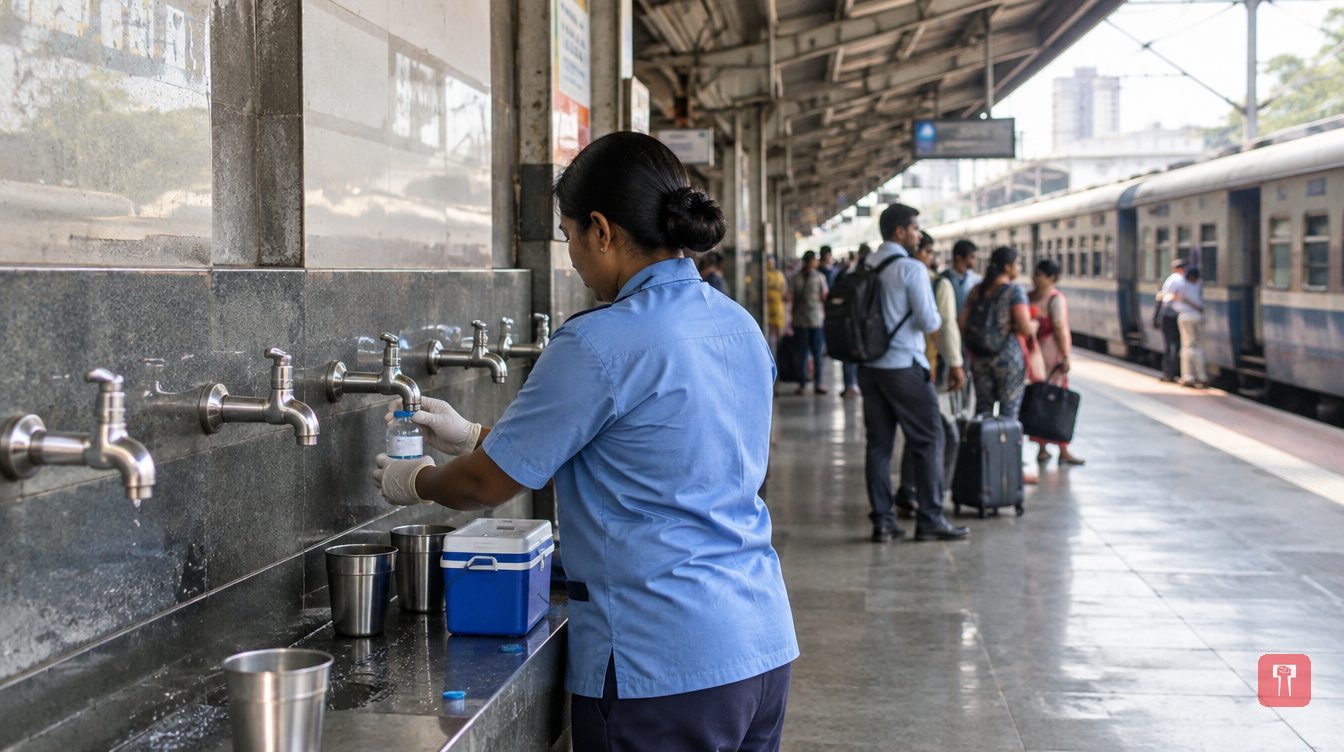 Images are not validated/verified
Western Railway conducted 371 drinking water quality tests at eight locations in a single day. In a statement issued on Saturday, October 24, the railway said all the results were satisfactory.
The testing was part of a routine programme to monitor water quality in the railway zone. Its aim is to check whether the drinking water supplied on railway premises is safe. It also aims to maintain hygiene standards for passengers and railway staff.
Of the 371 tests, 335 were for residual chlorine and 36 were bacteriological tests. According to Western Railway, the results were satisfactory in all the tests, meaning there was 100 per cent compliance on the parameters against which the water was checked.
The tests were carried out at eight locations and units on the Western Railway network. These include Jagjivan Ram Hospital, Mumbai Central, Vadodara, Ahmedabad, Ratlam, Rajkot, Bhavnagar and Dahod.
The residual chlorine test shows whether treated water retains enough chlorine to protect against infection from micro-organisms. The bacteriological test shows whether the water is contaminated with harmful micro-organisms and whether it meets the required safety conditions.
Western Railway said the results of all 371 tests conducted during the day were satisfactory. However, the statement did not give individual readings, the finer test parameters, or the methods used to collect and test the samples.
Large numbers of passengers and staff use water on railway premises, so regular testing of drinking water is an important part of safeguarding hygiene and public health. Monitoring chlorine levels and conducting bacteriological tests can reveal any problem with water quality. If the results show any irregularity, timely action can prevent the use of contaminated water and reduce the risk of waterborne diseases.
The latest tests are part of Western Railway's continuing effort to monitor drinking water quality across its network. The aim of regular testing is to catch problems early and to maintain proper hygiene standards at stations, hospitals and other railway facilities.
Western Railway said it would continue to monitor and test water quality as part of its measures for disease prevention and hygiene. The programme covers facilities used by both passengers and railway staff, so that drinking water supplied on railway premises meets the prescribed quality conditions.
Although all 371 tests on the day in question returned satisfactory results, continuous monitoring remains necessary to detect any change in water quality and to address any concern immediately. According to the railway zone, the tests are part of its broader efforts to maintain hygiene across the network.

Comments
No comments yet. Be the first.