

Maharashtra plans to bring private universities under fee regulator, leaders divided
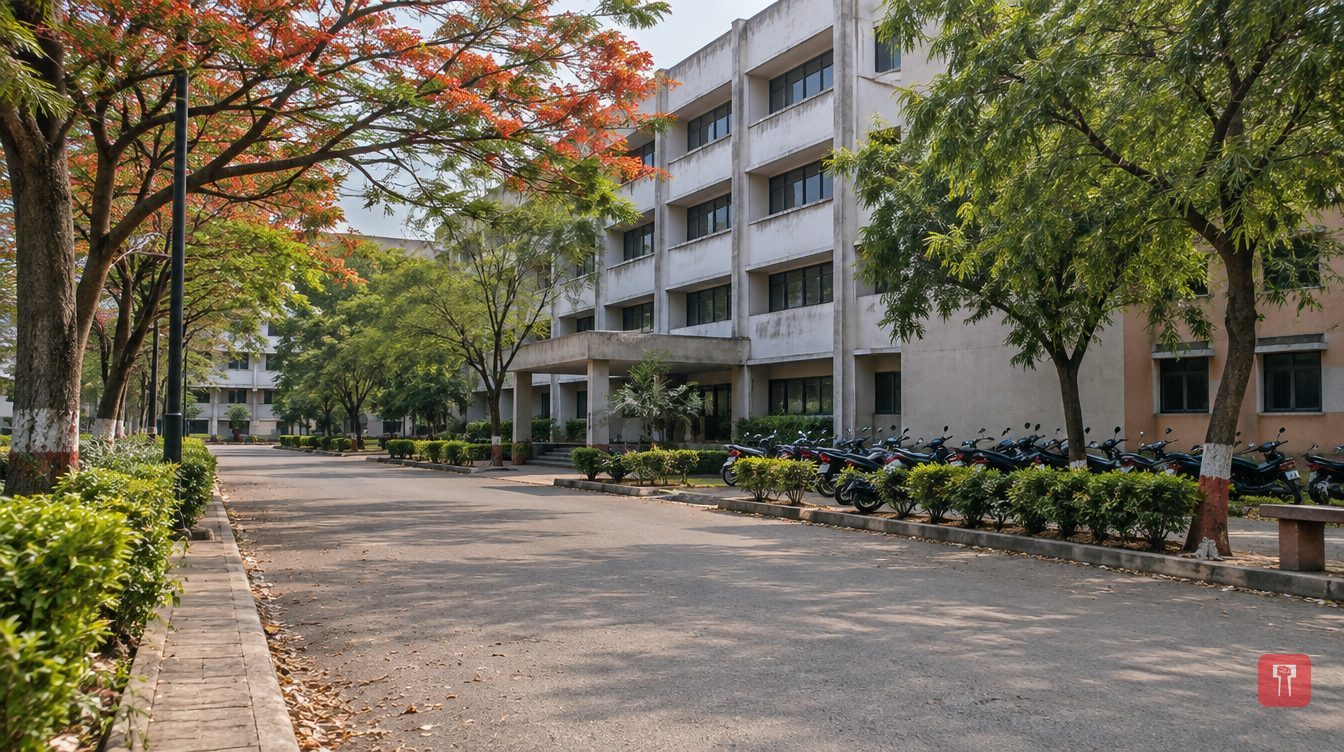 Images are not validated/verified
The state government proposes to bring self-financed private universities and autonomous colleges under the Fee Regulatory Authority, and ministers and other leaders have differing views.
The Maharashtra government is proposing to bring self-financed private universities and autonomous colleges under the Fee Regulatory Authority (FRA). Ministers and other political leaders have voiced differing views on the proposal.
The FRA fixes fees for private unaided professional educational institutions, including those running medical, engineering, pharmacy and management courses.
Higher and Technical Education Minister Chandrakant Patil disclosed the proposal in an interview to a regional news channel. He said the government is examining the fee structure, financial balances, land allotment and other details of self-financed universities. These institutions will have to submit information about their functioning on affidavit.
Patil questioned whether such universities even come under the FRA at present and how they acquired land for their campuses. He cited educational institutions in Kolhapur and Pune as examples.
The minister also referred to allegations against him linked to educational institutions controlled by the family of Congress Legislative Council member Satej Patil. He said those who live in glass houses should not throw stones at others.
Chandrakant Patil also claimed that when the government was considering bringing these institutions under the FRA, representatives of private educational institutions met Chief Minister Devendra Fadnavis along with Satej Patil. Their argument was that running institutions would become difficult if fees were restricted. According to the minister, the institutions then agreed to teach 10 per cent of economically weaker students at half fees, but this arrangement was never implemented.
The minister said the government wants to bring back this law in March. Under it, all such institutions will have to get FRA approval for their fee structure.
OBC leader Babanrao Taywade welcomed the possibility of a change in the existing fee regulation system. He said there is nothing fundamentally new in it, and that giving the FRA the responsibility of fixing fees will not greatly affect educational institutions. Taywade also said the fee-fixing committees under the state-level FRA are also represented in the high-level committees formed for deemed universities, autonomous colleges and private universities.
Kamalkishor Kadam, a former state education minister and NCP leader, questioned the state government's authority over institutions under the Centre. He asked, "How can the state government make a law for institutions that come under the Centre's jurisdiction?" Kadam also said that institutions built by leaders such as Vasantdada Patil and Yashwantrao Chavan have played a major role in bringing Maharashtra to the forefront of education.
Water Resources Minister Radhakrishna Vikhe Patil advised against a hasty decision on the FRA proposal. He said the government should first hold talks with private educational institutions. He asked what need there was to bring more institutions under fee regulation when the state government already has powers over colleges affiliated to universities. In his view, the aim of fee regulation should be to prevent exploitation of students and to ensure they get an education without unnecessary financial burden.
Rahul Patil, Shiv Sena (Uddhav Balasaheb Thackeray) MLA from Parbhani, appealed to the government to take a positive approach towards private educational institutions. He said these institutions have made an important contribution to nation-building and the spread of education. The government should support them rather than view them with suspicion, and the FRA should not be made a political weapon against educational institutions, he said.
Senior Congress leader Vijay Wadettiwar launched a sharp attack on Chandrakant Patil. He accused the government of intimidation and questioned the timing of the proposed fee regulation steps. The BJP-led panel suffered a setback in the recent Gokul milk union election in Kolhapur. Citing this, Wadettiwar asked whether the government remembered the need for strict regulation only after losing a cooperative society election. He alleged that the government is using threats against institutions and people who challenge its political interests. Wadettiwar warned, "No one is born or dies wearing the crown of power."
The issue was raised in the Assembly on March 11 by Shiv Sena MLA Mahesh Shinde. He alleged that the FRA was colluding with private educational institutions to approve inflated fee proposals. According to him, this has a financial impact on the state government, because it reimburses the fees of students from backward classes and economically weaker sections, including girl students.
Following these allegations, the government on July 7 formed a committee headed by Kalidas Wahane, a retired Bombay High Court judge. The committee's term was earlier fixed until October 6, and the state government has now extended it by two months. The committee is examining alleged complaints of corruption, irregularities in fee fixation and bias in favour of private educational institutions.
The controversy grew when the FRA approved fee increases for 1,272 unaided professional colleges for the academic year 2026-27. These approvals have raised questions about compliance with the amended fee regulation law and the financial burden on students and parents.
Reach readers on the ward they actually live in.
Advertise with Prime Time 24Reach readers on the ward they actually live in.
Advertise with Prime Time 24Reach readers on the ward they actually live in.
Advertise with Prime Time 24Choose primetime24.com as a preferred source on Google Google shows more stories from your preferred sources in Top Stories.
Reach readers on the ward they actually live in.
Advertise with Prime Time 24
Comments
No comments yet. Be the first.