

128 trees to go for Rs 2,400 crore CSMT redevelopment; 72 to be transplanted
 Images are not validated/verified
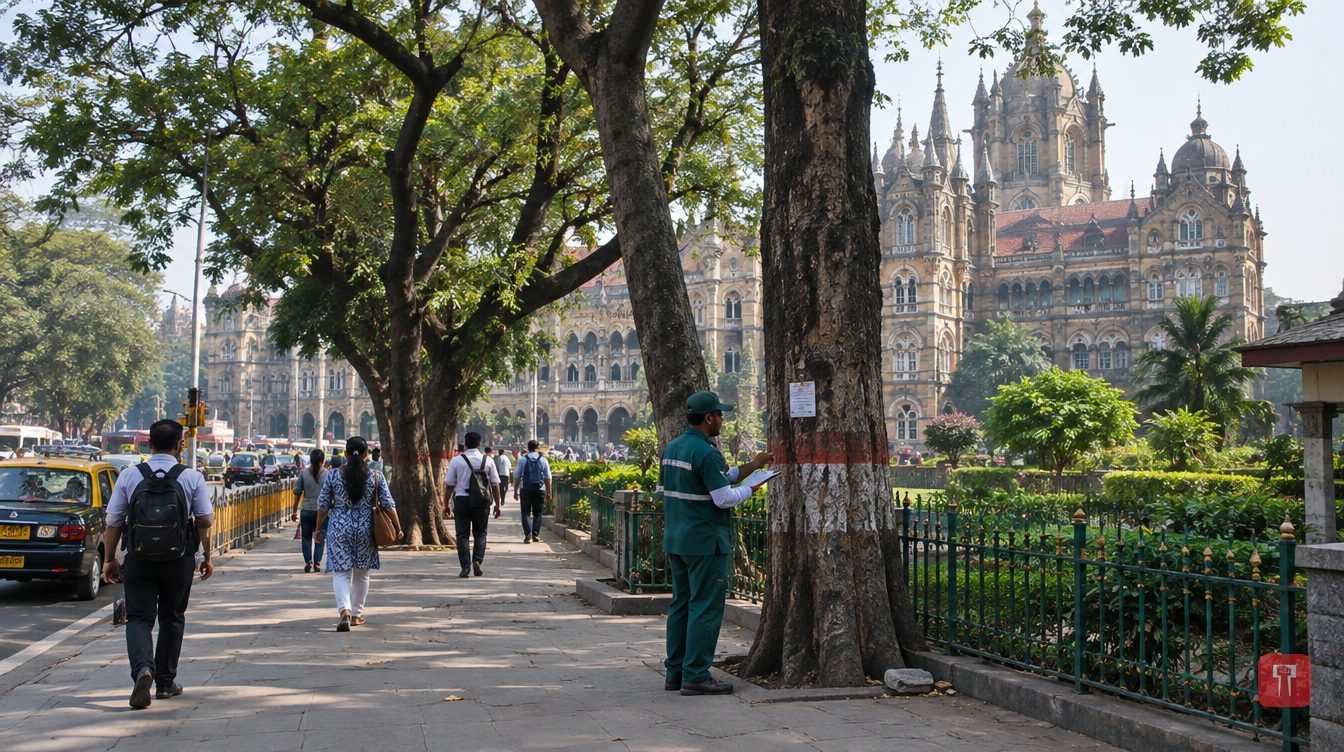
The Mumbai Tree Authority has approved removal of 128 trees for the redevelopment of the historic terminus, with 2,463 compensatory trees proposed outside municipal limits.
Approval has been given to remove 128 trees for the Rs 2,400 crore redevelopment of a historic railway terminus in Mumbai. The Mumbai Tree Authority granted the approval after the railway development agency responsible for the project submitted a proposal. The decision has heightened concern over the loss of heritage trees and the impact on the city's green cover.
Of the 128 trees identified near the station, 56 have been approved for permanent removal. The remaining 72 will be transplanted. As compensation, 2,463 trees are proposed to be planted at designated sites outside the municipal limits but within the Mumbai Metropolitan Region.
Under the compensatory plantation plan, 1,204 trees will be planted on railway land at Thakurli East. Another 1,259 trees will be planted near a dam at Digha. Railway officials said the plantation programme will be carried out as per the applicable rules.
Objections have been raised over the age of the affected trees. Opposition members questioned whether some trees could qualify for heritage protection. It was alleged that many trees could be more than 50 years old, while the civic garden department has put their age at roughly 40 to 50 years. Concern was also voiced that the trees' ages may have been underestimated to ease approval for the redevelopment. A conservationist said some of the affected trees could be more than 60 years old.
Questions have also been raised about the fate of trees removed in an earlier phase of the project. According to official records, permission was already granted in 2024 to cut 86 trees at the same site and plant 180 more. Doubts have also been expressed about whether the transplanted trees will survive.
It was clarified that the trees' ages were estimated by horticulturists and technical experts of the civic garden department. It was also suggested that some of the affected trees could be relocated to a municipal garden adjoining the station.
The redevelopment has been described as an essential infrastructure initiative to improve passenger amenities and modernise railway operations. The project aims to turn the UNESCO World Heritage railway station into a modern, airport-like transit hub while preserving its Victorian Gothic architecture. Better multimodal connectivity, decongestion, upgraded passenger facilities and more public spaces have been cited as the main objectives.
Even so, concerns remain over heritage protection, the success of transplantation and environmental sustainability. The challenge of balancing infrastructure modernisation with urban conservation persists.
Reach readers on the ward they actually live in.
Advertise with Prime Time 24Reach readers on the ward they actually live in.
Advertise with Prime Time 24Reach readers on the ward they actually live in.
Advertise with Prime Time 24Choose primetime24.com as a preferred source on Google Google shows more stories from your preferred sources in Top Stories.
Reach readers on the ward they actually live in.
Advertise with Prime Time 24
Comments
No comments yet. Be the first.