

IIM Indore study: GPS and traffic alerts help cab drivers, but training is essential
 Images are not validated/verified
A study co-authored by an IIM Indore professor finds that the benefit of in-car technology for cab drivers depends on their familiarity with it and the technical support they get.
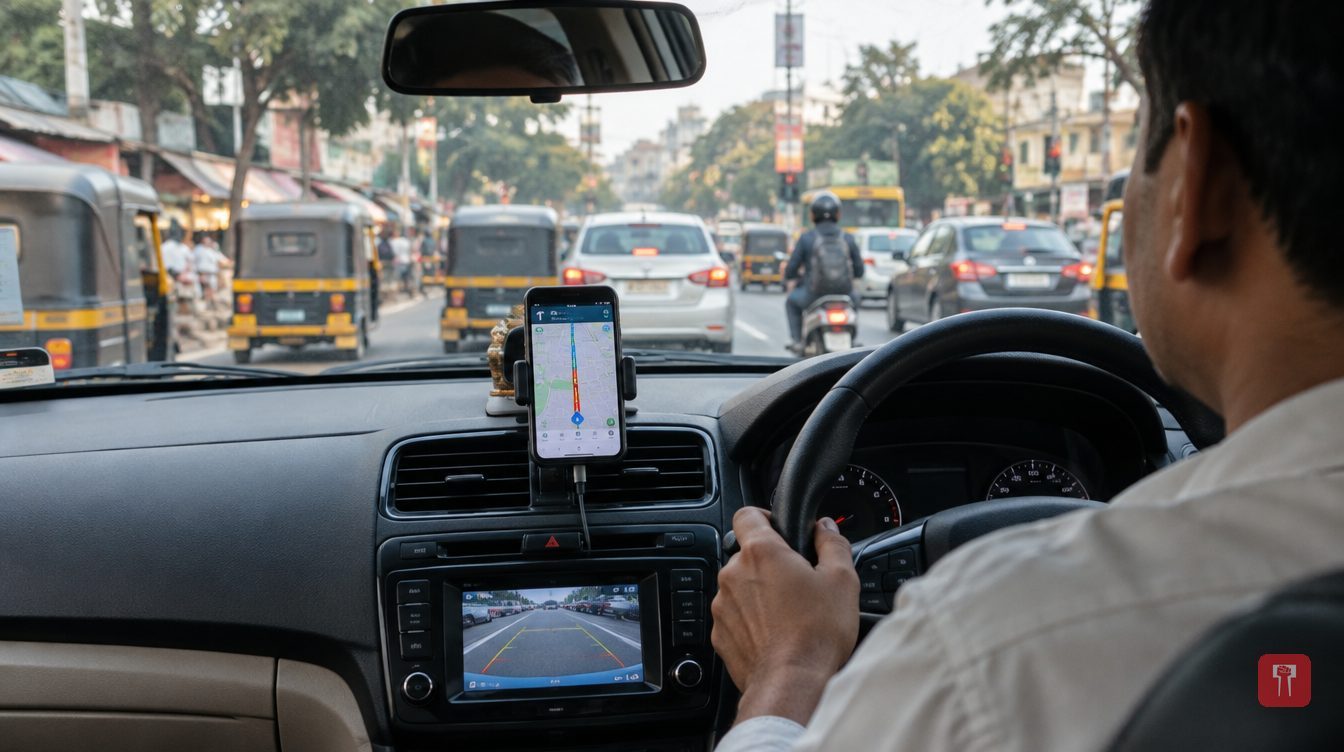
Technology such as GPS navigation, real-time traffic updates, parking sensors and reverse cameras can improve driving efficiency. According to a study by the Indian Institute of Management Indore (IIM-I), the benefit depends on how familiar drivers are with these tools and how much technical support they receive.
The co-authors of the research include IIM Indore's Prof Tanmay Kundu. It has been accepted for publication in the journal IEEE Transactions on Engineering Management.
The study is titled "Is Technology a Blessing or a Burden? Examining Technology-Related Performance Expectancy Among Cab Drivers". It looked at how cab drivers view the role of technology in their daily work and what makes them ready to adopt it.
The researchers used an exploratory sequential mixed-methods approach. In the first phase, they spoke to 47 male cab drivers between January and February 2024. Four main themes emerged: use of technology, perceived effectiveness, effect on behaviour, and the need for help.
Drivers said navigation apps helped them find routes and avoid traffic. Parking assist systems increased their confidence in manoeuvring in tight spaces. Some also spoke of reduced stress and better job satisfaction.
However, the study also found that some drivers had difficulty with unfamiliar interfaces, some questioned how reliable the systems were, and some prefer to drive in the traditional way. Experienced drivers, despite their skill, were at times hesitant to adopt new technology.
Drivers also stressed the need for hands-on training, step-by-step explanation, refresher sessions and easily available technical support.
In the second phase, between March and June 2024, 432 male cab drivers working with different cab service companies in Delhi, Mumbai, Hyderabad, Ranchi and Bengaluru were surveyed.
Using the Unified Theory of Acceptance and Use of Technology (UTAUT), the researchers tested how willingness to try new technology and familiarity with its features affect drivers' expectation of better performance.
All four proposed relationships were supported in the survey. Drivers who were more willing to try new technology and knew its features were more likely to believe it could improve their work. The link was stronger among drivers who received better technical support.
The conclusion is that merely providing technical tools is not enough. Mobility platforms, vehicle manufacturers and transport companies must also ensure simpler systems, practical training and timely help in resolving problems.
The study recommends digital literacy initiatives and continuous training for drivers, taking into account differences in drivers' experience and technical knowledge. Its findings could also be useful for the logistics and public transport sectors.
The research is based on drivers' self-reported experiences and does not establish a direct causal link between technology use and actual driving performance. Even so, it brings out the human factors that influence technology adoption.
The study says the success of digital change in transport will depend not only on technological innovation but also on driver training, reliability of systems and effective support.
Reach readers on the ward they actually live in.
Advertise with Prime Time 24Reach readers on the ward they actually live in.
Advertise with Prime Time 24Reach readers on the ward they actually live in.
Advertise with Prime Time 24Choose primetime24.com as a preferred source on Google Google shows more stories from your preferred sources in Top Stories.
Reach readers on the ward they actually live in.
Advertise with Prime Time 24
Comments
No comments yet. Be the first.