

Bhopal doctors build new food pipe from large intestine for youth whose gullet acid had sealed
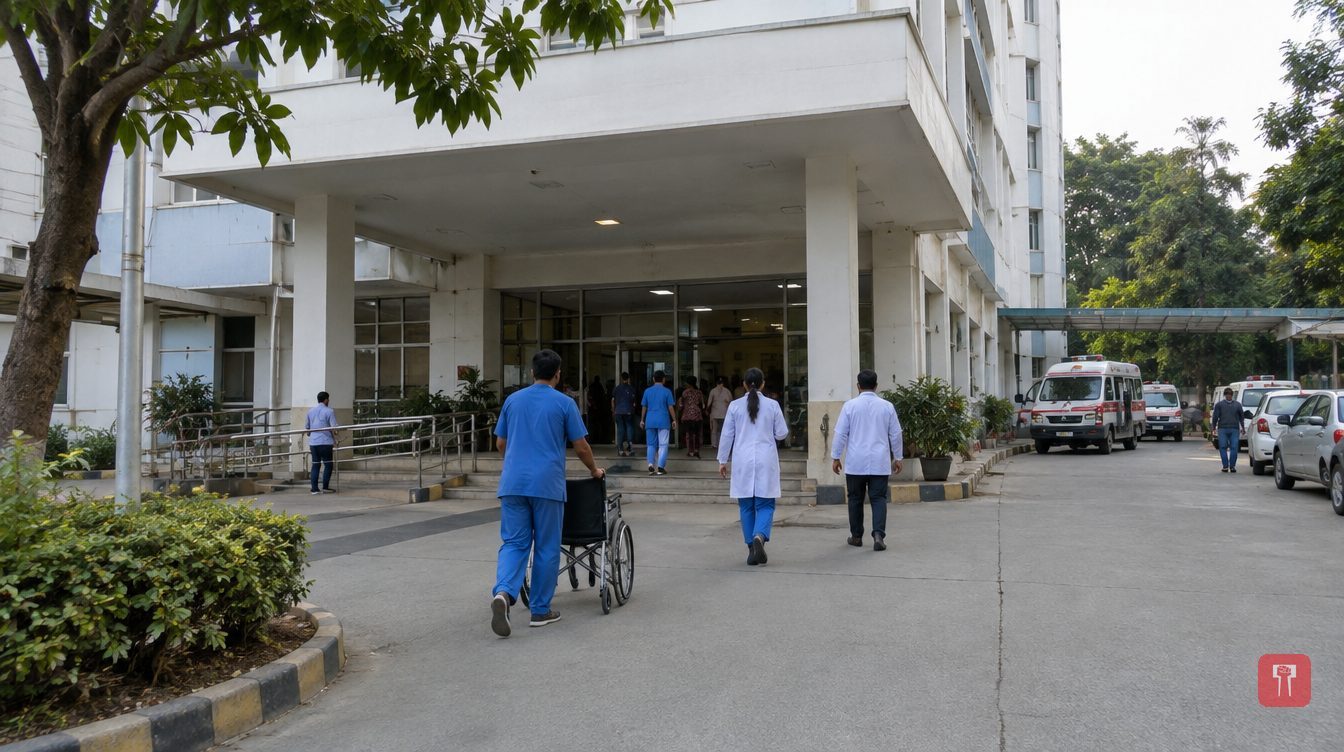 Images are not validated/verified
Surgeons at BMHRC in Bhopal restored oral eating for a 25-year-old whose gullet closed after he drank acid; he has been discharged.
Doctors at BMHRC in Bhopal have reopened the route for eating in a 25-year-old man through a complex surgery. His food pipe had been damaged completely and had closed after he drank acid. For a year and a half he could not take even water by mouth, let alone food. After the surgery he is now eating by mouth and has been discharged from the hospital.
According to the doctors, the young man drank acid about a year and a half ago. It caused severe damage to his food pipe, which gradually closed completely. Doctors tried to open the pipe through endoscopy but did not succeed. As the pipe was fully blocked, it was also not possible to place a stent in it. After this, the patient continued to be given liquid nutrition through the small intestine.
Dr Pramod Verma, associate professor in the department of gastrointestinal surgery at BMHRC, said the patient's stomach had also been damaged by the acid, so it could not be used to make a new food pipe. A healthy part of the large intestine was then chosen as the alternative.
In the surgery, about 20 cm of the large intestine was carefully separated. Keeping its blood supply intact, it was carried upward and joined to the healthy part of the food pipe. The other end was joined to the small intestine, creating a new route for food. The remaining part of the large intestine was also rejoined so that it could continue to function normally.
Dr Giriraj Garg, associate professor in the CTVS department, said the surgery was technically highly challenging. Carrying the new food pipe up along the planned route and joining both its ends at the right places was the most important part. Changes in the tissues caused by the old acid injury made the challenge greater. The operation was performed by a joint team from the gastrointestinal surgery and CTVS departments.
The team also included Dr Anurag Yadav, head of the anaesthesiology department, and associate professor Dr Shilpa Tiwari. Dr Manisha Shrivastava, in-charge director of BMHRC, said coordination among specialist departments is making better treatment possible in such complex cases. The patient's entire treatment was provided free under the Ayushman Bharat scheme.
Reach readers on the ward they actually live in.
Advertise with Prime Time 24Reach readers on the ward they actually live in.
Advertise with Prime Time 24Reach readers on the ward they actually live in.
Advertise with Prime Time 24Choose primetime24.com as a preferred source on Google Google shows more stories from your preferred sources in Top Stories.
Reach readers on the ward they actually live in.
Advertise with Prime Time 24
Comments
No comments yet. Be the first.