

Planned development around metro stations will boost public transport use, says Ashwini Bhide
Ashwini Bhide told the 19th Urban Mobility India Conference in Bhubaneswar that planned growth near metro stations would draw more commuters to public transport.
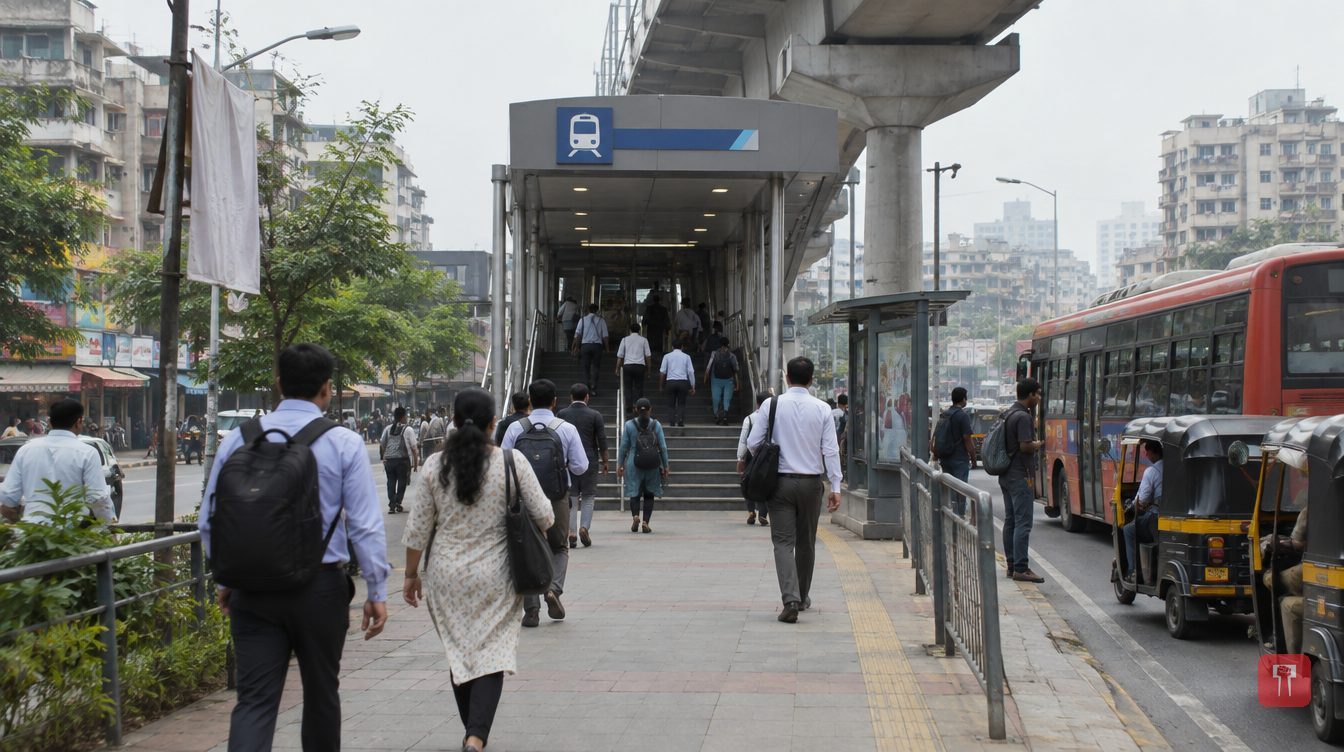 Images are not validated/verified
Ashwini Bhide, Managing Director of Mumbai Metro Rail Corporation and Commissioner of the Brihanmumbai Municipal Corporation, said on Saturday that if development around metro stations is planned, more people will travel by public transport. According to her, this would improve daily commuting and support economic growth over the long term.
Bhide was speaking at the 19th Urban Mobility India Conference in Bhubaneswar. She said transport infrastructure and urban development in cities must go hand in hand, so that travel becomes easier and cities grow sustainably.
She chaired a session on land use and transport beyond city limits. The session discussed how a city's expansion should follow the public transport network, and how planning should improve across administrative boundaries.
Bhide described Maharashtra's efforts towards transit-oriented development. This is an approach to planning in which housing, shops, offices and essential facilities are located close to public transport.
She said the policy has been implemented in Nagpur and Pune. In Mumbai too, a policy promoting higher-density development within about 500 metres of underground metro stations is already in force.
The aim of the approach is to create neighbourhoods where residents can easily reach offices, shops and essential facilities by public transport. With different activities located near metro stations, dependence on private vehicles will fall and public transport will become more convenient for daily travel.
The policy also links development permission to funding for public infrastructure. The additional premium charged for permitting more built-up area is spent on local amenities and transport infrastructure, which helps develop the areas around metro stations.
Bhide said planned development around stations would make them easier to reach and daily travel more convenient, which could increase ridership. If homes and businesses are near stations, people will be able to reach offices and essential services with less dependence on private vehicles. Existing transport infrastructure will be used better, and the need for long journeys in the city will also fall.
Travel demand in Mumbai is tied to how homes, jobs and business activity are distributed. Linking land use with metro expansion could therefore be important in improving travel in the city.
However, such policies will work only if supporting infrastructure such as roads, pedestrian space and local transport connections is in place. Coordinated planning is therefore necessary so that higher-density development does not put additional burden on existing civic amenities.
Bhide also stressed coordination between government departments and local bodies, so that transport planning improves and development in areas beyond city limits can be managed.
As cities expand, people's daily travel begins to cross municipal boundaries. Transport networks and land-use policies must therefore account for travel between cities and surrounding areas, and watching the development of a single administrative area is not enough.
She cited the experiences of cities such as London and Singapore, and the recommendations of urban planning experts. According to her, these can help in shaping future mobility policies.

Comments
No comments yet. Be the first.