

Drought-hit talukas to get CM Relief Fund cells, each led by a medical officer
 Images are not validated/verified
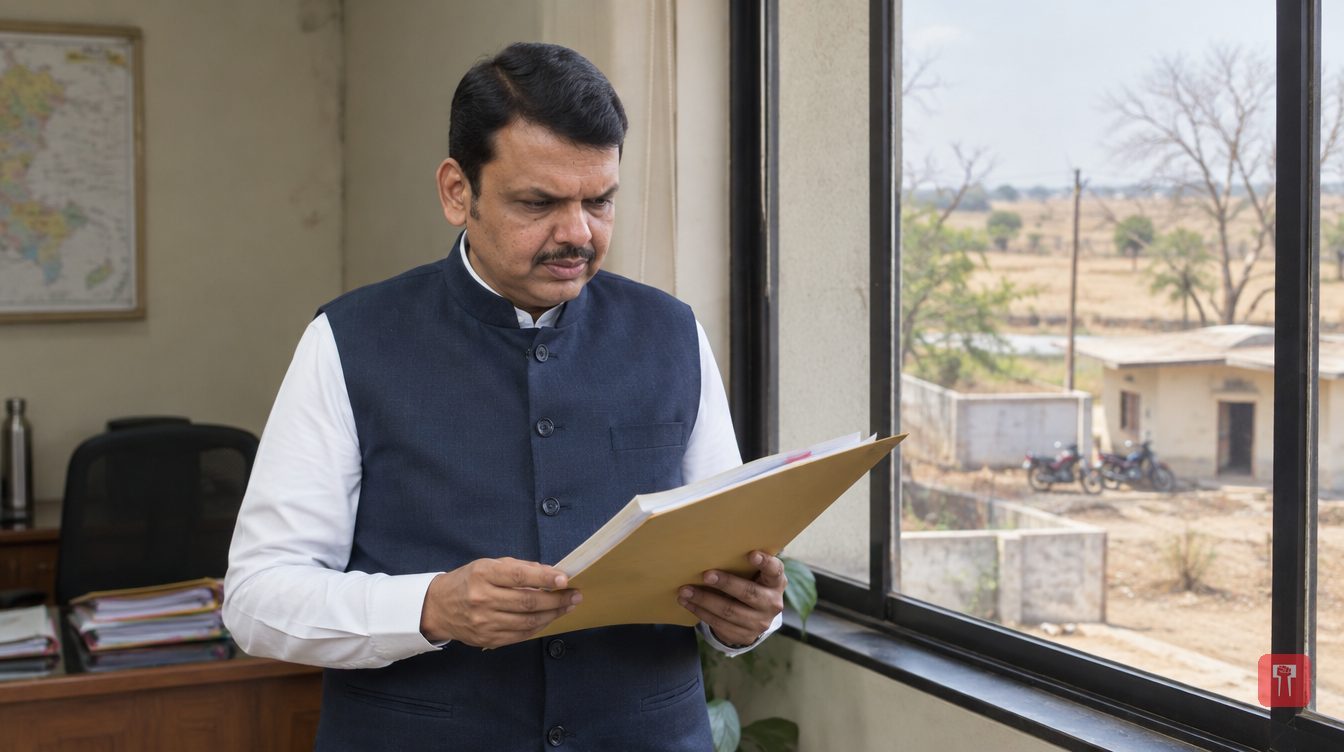
Chief Minister Devendra Fadnavis has approved taluka-level Chief Minister's Relief Fund cells so needy patients in drought-hit talukas get timely treatment.
Patients living in drought-affected parts of Maharashtra will soon have a medical help desk at the taluka headquarters. Chief Minister Devendra Fadnavis has cleared a plan to open Chief Minister's Relief Fund cells at taluka level, with a dedicated medical officer posted to every cell. The government's aim is to make sure health services actually reach people in areas hit by the dry spell and that those who need treatment get it in time.
The General Administration Department issued the government order on November 6, 2026. Besides the cells, the order provides for health coordination committees at both district and taluka levels.
The new cells are not meant for every taluka. They will be opened only where drought has been declared under the 'Trigger-1' category for the Kharif season of 2026. Each cell will work out of the taluka's Panchayat Samiti office. The District Collector will name a separate medical officer to head it. Where clerks and typists are available to assist, the Block Development Officer has been told to arrange the necessary facilities as a priority.
The cell will first try to route each patient to a suitable scheme, depending on eligibility. The options are Ayushman Bharat, the Mahatma Jyotirao Phule Jan Arogya Yojana, schemes run by the Labour Department and charitable hospitals. A patient who falls outside all of these will not be turned away. The application will go through the concerned hospital to an online system for approval, and the cell will guide the patient at each step.
Finding the patients will also be the cell's job. Its head must identify the needy through sub-district and rural hospitals, primary health centres, sub-centres and ASHA workers. The order makes the cell responsible for seeing that nobody is refused treatment.
At the taluka level, the local MLA will chair the committee. The Sub-Divisional Officer (Revenue) will be co-chair. Members include the tehsildar, the Block Development Officer, the taluka health officer, the medical superintendent, and representatives of the Indian Medical Association and the Chemists and Druggists Association. The head of the cell will be the member secretary.
The district committee will be chaired by the guardian minister, and the District Collector will be co-chair. The district health officer will serve as member secretary. Two social workers from the medical field will sit on it as non-official members and watch over its functioning.
Both committees can draw on outside expertise. Doctors and specialists will be brought in from the state's health sciences university, the Indian Medical Association, the Maharashtra Medical Council, local medical bodies and private hospitals. Health camps will be organised in drought-hit areas, and medicines will be handed out to patients there. Each committee is required to meet a minimum of twice every month.
Priority will go to remote and densely populated pockets, as well as places with poor health facilities. These will be identified first and action taken there before elsewhere. The committees will also look at drinking water and illnesses linked to heat, and will plan health camps, mobile medical teams and visits by specialist doctors. Women, children, the elderly and patients with diabetes and high blood pressure are to get special attention.
Reporting runs upward. The taluka cell will send its daily work and camp details to the district cell. The district cell will pool the reports from all talukas and forward them to the Chief Minister's Relief Fund cell at Mantralaya.
The move follows Mr Fadnavis's instructions to widen the reach of the Relief Fund system and take it to more people. With a cell in the taluka, needy patients in drought-hit areas can be spotted early, and proper treatment and financial aid can follow. The benefits of the health schemes and help from the Relief Fund will be matched to each patient's need.
Rameshwar Naik, head of the Chief Minister's Relief Fund and Charitable Hospital Aid Cell, said the main purpose of the initiative is that no needy patient should go without treatment because of financial hardship.
Reach readers on the ward they actually live in.
Advertise with Prime Time 24Reach readers on the ward they actually live in.
Advertise with Prime Time 24Reach readers on the ward they actually live in.
Advertise with Prime Time 24Choose primetime24.com as a preferred source on Google Google shows more stories from your preferred sources in Top Stories.
Reach readers on the ward they actually live in.
Advertise with Prime Time 24
Comments
No comments yet. Be the first.