

Maharashtra makes daily case records mandatory for all quasi-judicial and appellate authorities
 Images are not validated/verified
The General Administration Department's 3 November circular sets a uniform procedure for maintaining a roznama in every quasi-judicial and appellate proceeding in the state.
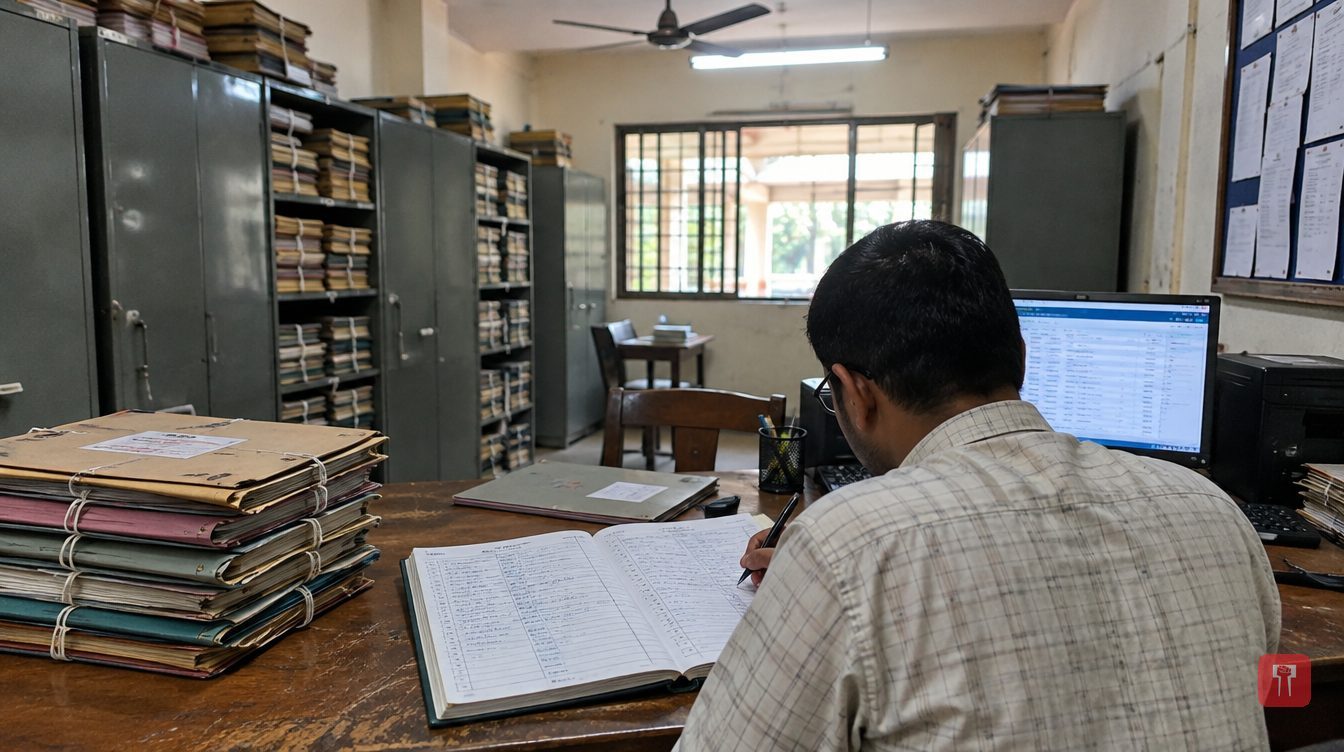
The Maharashtra government has made it mandatory for all quasi-judicial and appellate authorities across the state to maintain a roznama, a complete record of the day-to-day proceedings. The General Administration Department issued a circular to this effect on November 3. It lays down a uniform procedure for keeping a roznama in all quasi-judicial and appellate proceedings in Maharashtra.
The decision follows strong observations by the Nagpur Bench of the Bombay High Court. The Bench made the remarks in an October 7 order in Writ Petition No. 4512 of 2026. The High Court took serious note of a matter that had been pending for about 14 years and had no official roznama recording its proceedings. After the court's rebuke, the state government had to put in place a full framework for record-keeping. It includes a separate registration number for each case, a date-wise account of hearings and the collection of contact details of the parties.
Under the new framework, every quasi-judicial and appellate authority will have to keep a separate roznama for each case. Every case will get a unique registration number in both the physical and the electronic record, so that it can be easily traced and viewed. The roznama must carry a clear and factual account of every hearing.
The following entries will be mandatory in the roznama: a summary of what happened at the hearing and the names of the parties present and their representatives; a list of all files and documents submitted; the directions, orders and interim orders of the bench; the name of the presiding officer and the case number; the dates of the previous and next hearings; and the signatures of those present. The reason for any absence or missing signature must be clearly recorded. The roznama will also carry the dated certification of the competent authority, and any change must be made in a way that can be traced.
In addition, authorities will have to record a valid postal address, email and phone number when a case is filed. A verified record of the delivery of electronic notices must also be preserved.
The circular calls for regular review to dispose of pending cases and for timely disposal under the relevant laws. Citing the 2005 law, the Delay in Discharge of Official Duties Act, the state has clarified that it cannot arbitrarily impose a uniform time limit on all quasi-judicial proceedings. Administrative secretaries will be directly accountable for audit and for disciplinary action on lapses.
Jamshed Mistry, a lawyer and amicus curiae appointed by the Bombay High Court in several important cases, welcomed the decision. He said the circular would bring transparency to the state's tribunals and administrative bodies. "This circular is very necessary and useful for maintaining complete transparency in the records of the administration and tribunals, and it will help litigants a great deal. The record and details of the day-to-day proceedings can be easily obtained through legal transcription," Mistry said.
Mistry also said that keeping an accurate record of judicial and quasi-judicial proceedings is rooted in the established history of law. He said such a structured system for accurately recording evidence in courts began in the United Kingdom in 1851. According to him, while preserving statutory judicial authority, the directive empowers citizens to check compliance, ends hearings held without a record and lets them seek timely justice.
Prashant More, a resident of Navi Mumbai, said: "In my case at MahaRERA, I keep getting date after date without any relief. This roznama circular is welcome, but the real test is whether it is strictly followed on the ground."
Abhishek Wispute, a resident of Dombivli, said: "I have been waiting for justice since 2014, when the developer cheated us in our project in Ambernath. We had to go to MahaRERA, which issued an execution order, but it has not been acted upon for the past five years. I have also been blacklisted in CIBIL for defaulting on home loan instalments. Government circulars are fine, but what is their use until the common man gets justice?"
Reach readers on the ward they actually live in.
Advertise with Prime Time 24Reach readers on the ward they actually live in.
Advertise with Prime Time 24Reach readers on the ward they actually live in.
Advertise with Prime Time 24Choose primetime24.com as a preferred source on Google Google shows more stories from your preferred sources in Top Stories.
Reach readers on the ward they actually live in.
Advertise with Prime Time 24
Comments
No comments yet. Be the first.