

Animal and environment groups object to 2,543 trees affected by GMLR and Manori desalination projects
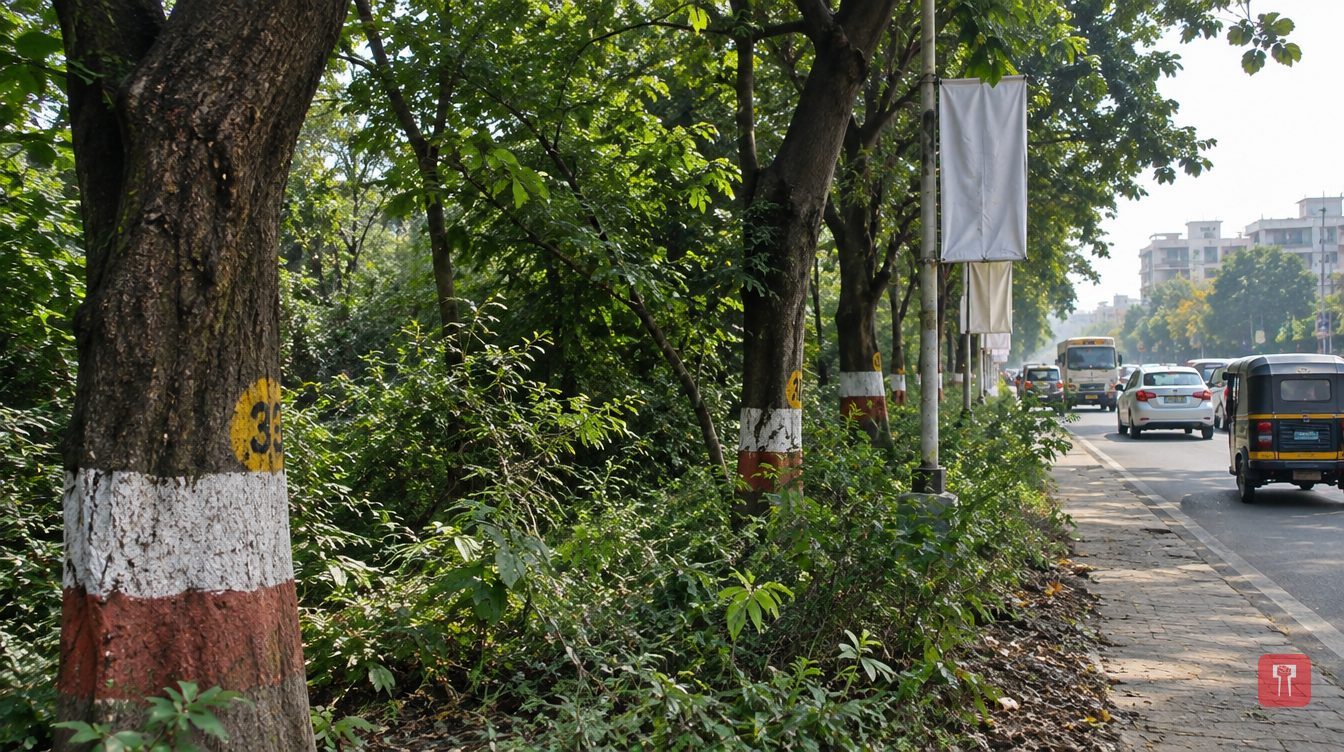 Images are not validated/verified
Several groups have filed objections with the BMC's Tree Authority and want a full environmental assessment and a joint site inspection before any action on the trees.
A total of 2,543 trees could be affected by the Goregaon-Mulund Link Road (GMLR) and the proposed seawater desalination project at Manori. Several animal welfare and environmental organisations have filed objections with the BMC's Tree Authority. The written objections were submitted on October 29.
The objectors include the International Organisation for Animal Protection (OIPA), Amma Care Foundation (ACF) and Plant and Animals Welfare Society-Mumbai (PAWS-Mumbai). Parivartan Pratishthan, Aastha Animal Welfare Foundation and People for Animals-Palghar have also filed separate objections. The organisations are concerned about the impact on greenery, biodiversity and the natural habitats of wildlife.
The GMLR will connect Goregaon on the Western Express Highway with the Airoli toll naka at Mulund. According to its public notice, 1,524 trees are likely to be affected. Of these, 858 are proposed to be cut and 666 to be transplanted.
The proposed desalination project at Manori in Borivali West has an initial capacity of 200 MLD (million litres per day), with a plan to raise it to 400 MLD. According to the tree notice, 1,019 trees have been identified across five locations. Of these, 42 will be cut and 952 transplanted. The five locations are as follows.
Dahisar East, Sant Dnyaneshwar Marg: of 13 existing trees, one will be cut and one transplanted. Borivali West, Town Planning Scheme No. 3, Final Plot No. 102: of 24 trees, four will be cut and 11 transplanted. The Manori desalination project site: of 971 trees, 28 will be cut and 939 transplanted. Kandivali West, small bridge on the B-pipeline of the Poisar river, Jawaharlal Ramsumer Yadav Marg: of nine trees, eight will be cut and one transplanted. Kandivali West, RNA area, the 13.40-metre-wide Development Plan road linking MG Road with Bandarpakhadi Lake Road: of two trees, one will be cut and the other transplanted.
The organisations have asked for a full environmental assessment and a joint inspection of the project site before any action is taken on the trees. They say the assessment should also cover the habitats of birds, snakes, reptiles, small mammals and pollinating insects, as well as the natural routes wildlife uses to move through the area. They have demanded that a separate record for every affected tree, giving its age, species, health and ecological importance, be made public. The authorities have been asked to examine alternative engineering designs and routes so that as few trees as possible are cut.
On transplantation, the organisations want trees to be replanted at suitable sites near their original location wherever possible. They have called for monitoring for at least three to five years to establish whether the trees survive and grow, and for compensatory plantation to be properly carried out. They want the transplantation done under the supervision of a qualified arborist, with survival assessed at 12, 24 and 36 months.
On the Manori project, the organisations say the assessment should not be limited to trees. They want the effect on the marine environment of drawing in seawater and releasing concentrated saline water (brine) back into the sea to be examined as well. They are also demanding that all environmental clearances, pollution control permissions, coastal regulation approvals and related assessment reports be made public.
For both projects, the organisations have asked for a joint site inspection in the presence of their representatives. They say no action should be taken on the trees until an independent and complete environmental assessment is finished. They have also sought interim measures under the applicable laws, proper consideration of all objections, and a written reply with reasons to each objection. The organisations made clear that they are not against development projects, but want that the cost of expanding infrastructure is not paid by greenery, biodiversity and wildlife habitats.
Sunish Subramanian Kunju, honorary wildlife warden for Mumbai Suburban district of the Maharashtra Forest Department, said: "Balancing development and environmental protection is the need of the hour. Trees are not just greenery; they are the natural home of countless birds, snakes, reptiles and other wildlife. Proposals affecting thousands of trees are not just a matter of the loss of individual trees; they raise serious questions about the survival of the entire ecosystem and biodiversity."
He said: "It is extremely important to protect the natural routes and habitats of wildlife in the areas adjoining Sanjay Gandhi National Park. I strongly appeal to the authorities that a full environment and wildlife habitat assessment be carried out for both projects and a joint site inspection held. Alternative routes and engineering solutions should be explored so that fewer trees are cut. Nature cannot be brought back merely by promising transplantation. Wildlife should not be endangered, nor its natural habitats destroyed, in the name of expanding infrastructure. Protecting nature is not the responsibility of environmental activists alone, but a shared responsibility of all of us."
Reach readers on the ward they actually live in.
Advertise with Prime Time 24Reach readers on the ward they actually live in.
Advertise with Prime Time 24Reach readers on the ward they actually live in.
Advertise with Prime Time 24Choose primetime24.com as a preferred source on Google Google shows more stories from your preferred sources in Top Stories.
Reach readers on the ward they actually live in.
Advertise with Prime Time 24
Comments
No comments yet. Be the first.